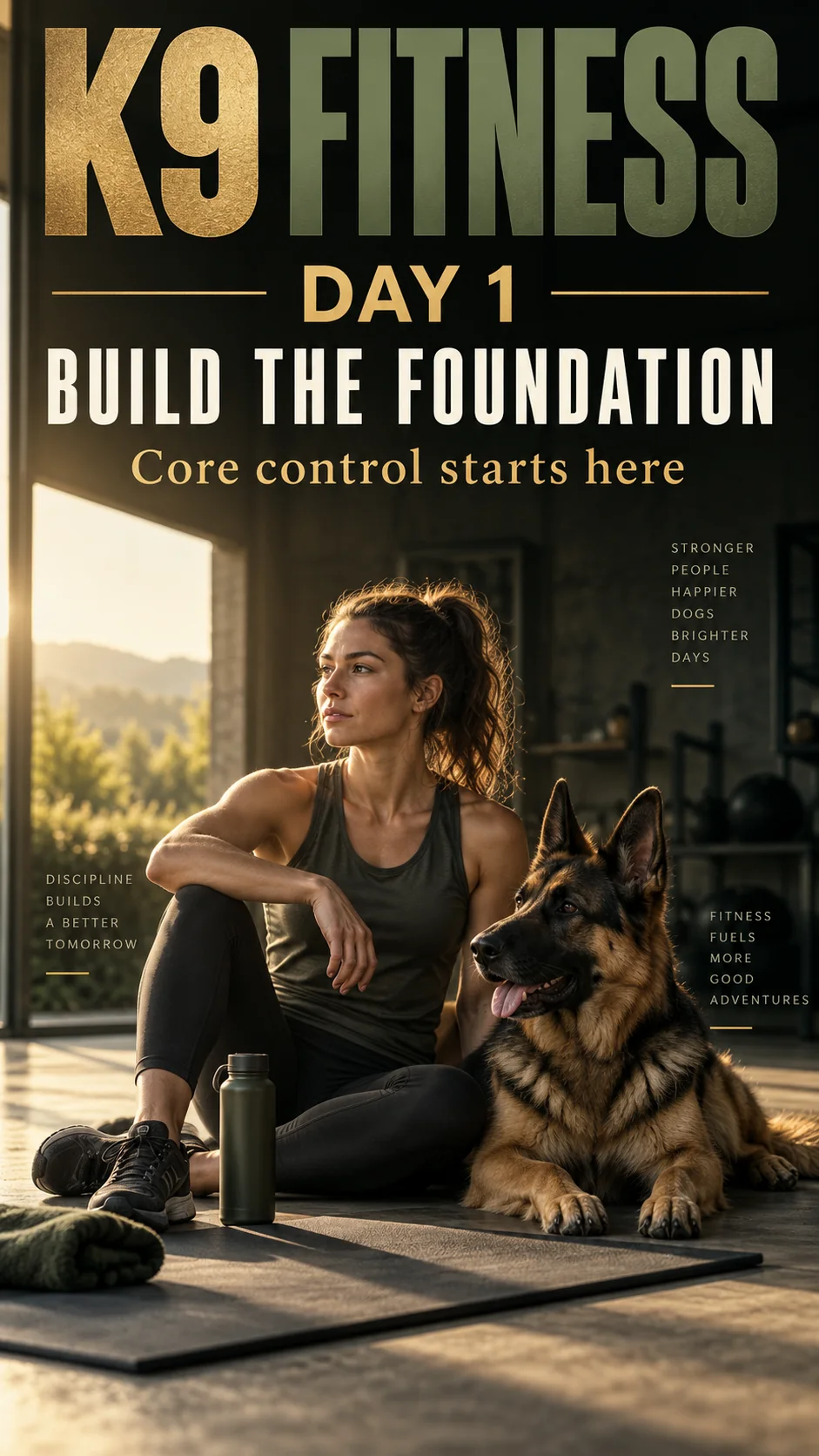
K9 FITNESS — DAY 1: Build the Foundation
Rectus Abdominis + Core Control
A stronger core starts with a skill you can practice today: moving your arms and legs without losing control of your trunk. That skill matters when you pick up a grocery bag, reach into the back seat, or get down on the floor with your children. Day 1 keeps the workload modest so you can notice what your body is doing.
The rectus abdominis runs along the front of your abdomen, but core training involves more than the muscles people call a six-pack. The abdomen, back and hips work together. Today’s goal is a comfortable, repeatable position while you breathe. You do not need to flatten your back forcefully or brace at maximum effort.
Today’s practice
Begin with 2–3 minutes of easy movement. Use the lowest suggested dose, keep effort comfortable, and rest between lessons whenever needed.
Core brace — 5 slow breaths. Lie on your back with knees bent and feet down. Gently firm your abdomen as though preparing for a light nudge; keep breathing.
Dead bug — 5 repetitions per side. Start with knees bent above your hips. Move one heel toward the floor, then return; shorten the reach if your back position changes.
Flutter kicks — optional 10 seconds. Use small alternating kicks with legs raised high enough to stay controlled. Substitute heel slides if you feel back discomfort or cannot breathe normally.
Bird dog — 5 repetitions per side. From hands and knees, reach one leg back and the opposite arm forward without twisting; begin with just the leg if needed.
Forearm plank — 10–15 seconds. Use a wall, counter or knees as needed. Keep shoulders supported and end the hold before your hips sag.
Start with one round and rest 30–60 seconds between movements. A second round is optional only if the first felt easy and controlled. Skip a finisher today; finishing with good form is the win.
Canine partner routine
Take a relaxed 5–10 minute leash walk if that suits your dog’s usual activity. Let your dog sniff and reward a few calm check-ins. Keep the dog off your mat during floor exercises.
Match activity to your dog’s age, health and conditioning. Avoid hot conditions and hot pavement; stop for unusual fatigue or distress. Ask your vet about activity limits when needed.
Make it useful tomorrow
Which movement could you perform while keeping your breath smooth? Record that movement and the version you used. That becomes your personal starting point.
Keep a simple record: movement version, repetitions, effort and next-day response. You do not need a dog or equipment to belong in this course.
Before you train
This is general fitness education, not individualized rehabilitation. Choose pain-free movements; stop for sharp pain, dizziness, chest pain or unusual shortness of breath. If an injury or medical condition affects exercise, use advice from your clinician. Take recovery days between demanding sessions.
Sources and further reading
The sources below provide general background, not validation of this exact workout prescription.
Core training background — Mayo Clinic Health System
General activity guidance — CDC