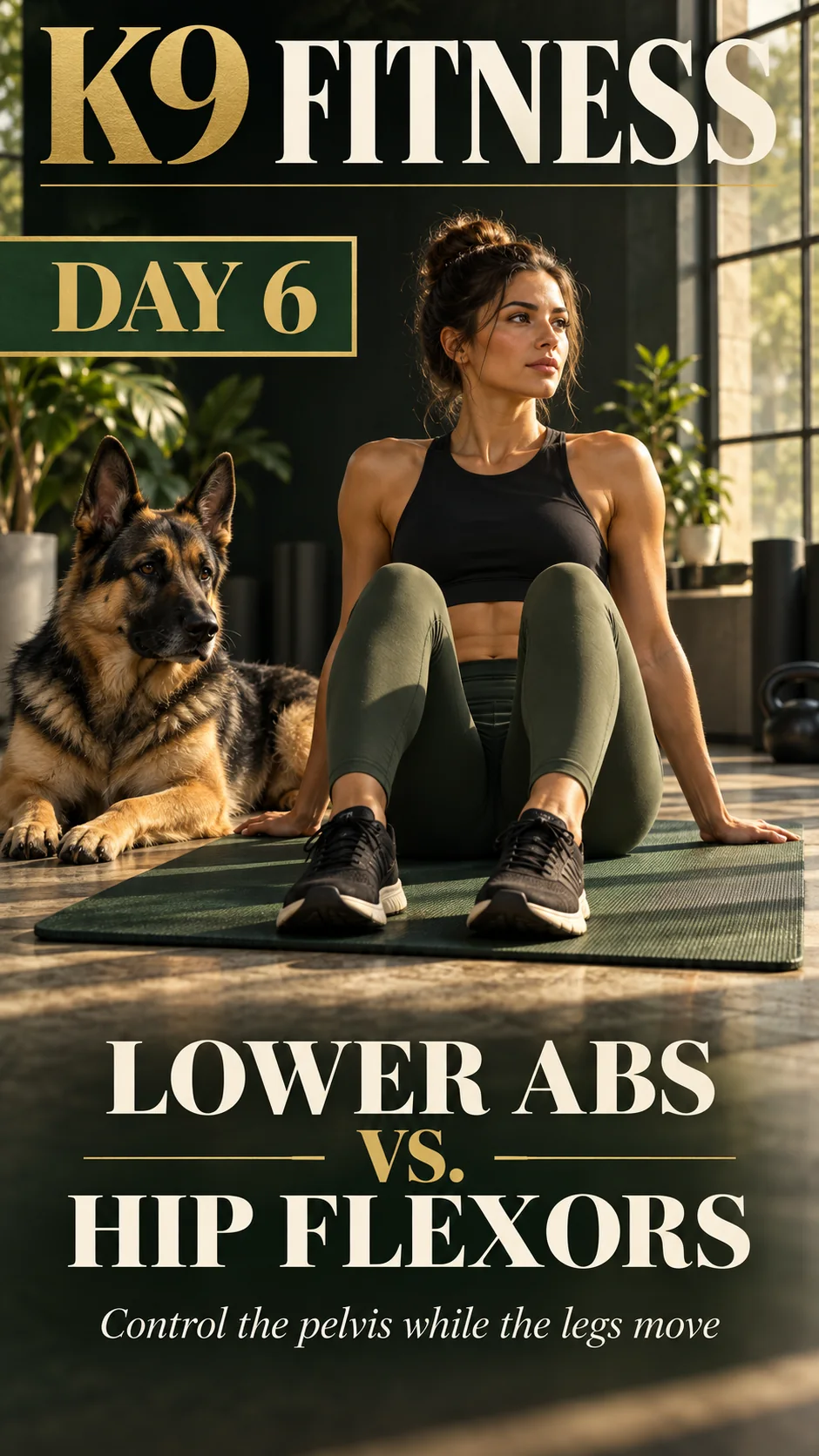
K9 FITNESS — DAY 6: Lower Abs vs. Hip Flexors
Control the Pelvis While the Legs Move
Leg raises and flutter kicks often get marketed as lower-ab exercises. They also ask your hip flexors to work. Today teaches you to adjust the movement so the exercise matches the control you have right now.
The iliopsoas is an important hip-flexor group. Hip flexors help lift the thigh, and they are useful muscles rather than an enemy to switch off. The challenge is coordinating leg movement with abdominal and pelvic control. Lowering your legs farther increases the demand; it does not automatically make the exercise better.
Today’s practice
Begin with 2–3 minutes of easy movement. Use the lowest suggested dose, keep effort comfortable, and rest between lessons whenever needed.
90/90 core brace — 5 slow breaths. Lie with knees bent above hips, or support the lower legs on a chair. Keep the ribs comfortable.
Dead-bug heel tap — 6 per side. Lower one heel toward the floor without losing pelvic control. Reduce the reach when necessary.
Reverse crunch — 8 small repetitions. Curl the pelvis gently rather than swinging the legs. Skip if uncomfortable.
Flutter kicks — optional 10–15 seconds. Keep legs raised and use small movements. Raise them more or switch to heel slides when the back arches.
Kneeling side plank — 10–20 seconds per side. Maintain a comfortable side support while breathing.
Begin with one round; two is the upper option when recovered and comfortable. The earlier guide used longer holds and two sets; this rebuilt blog includes an easier entry point. Do not force the original dose if technique changes.
Canine partner routine
Walk at an easy pace for 5–10 minutes if appropriate for your dog. Pause for sniffing instead of using the leash for resistance. Keep dog activities separate from floor exercises.
Match activity to your dog’s age, health and conditioning. Avoid hot conditions and hot pavement; stop for unusual fatigue or distress. Ask your vet about activity limits when needed.
Make it useful tomorrow
Did raising your legs or shortening the reach improve control? Record the adjustment so you can repeat it.
Keep a simple record: movement version, repetitions, effort and next-day response. You do not need a dog or equipment to belong in this course.
Before you train
This is general fitness education, not individualized rehabilitation. Choose pain-free movements; stop for sharp pain, dizziness, chest pain or unusual shortness of breath. If an injury or medical condition affects exercise, use advice from your clinician. Take recovery days between demanding sessions.
Sources and further reading
The sources below provide general background, not validation of this exact workout prescription.
Core training background — Mayo Clinic Health System
General activity guidance — CDC